
Fairborn Address Sources Across Record Eras
Earlier occupants at a Fairborn address are not found in one master list. The usable trail changes with the era. Begin with the current parcel as an anchor, then choose the record set that reaches the period in question. Ownership, tax value, a listed address, a household snapshot, and a death or estate record are different forms of evidence. Keeping their limits visible prevents a deed from being mistaken for proof of occupancy, or a directory entry from being mistaken for a complete household account.
| Historical source | Years it reaches | Where held | What it can add |
|---|---|---|---|
| Recorder online document index | 1984 to present | Greene County Recorder search | Modern recorded-document chronology and party leads |
| Recorder deed holdings | 1803 to present | Recorder counter | Recorded land evidence across the county's history |
| Archives transcribed deeds | 1804 to 1864 | Records Center & Archives | Early deed evidence and an archive access route |
| Auditor tax records | Early records 1800 to 1838; later duplicates at Archives | Ohio History Connection and county offices | Assessed value and possible transfer or improvement clues |
| City directories and criss-cross information | Directories to 1870, with individual years to verify | Greene County Room | A listed address or occupant lead for an edition |
| Newspapers and census | Microfilm to 1814; named federal household schedules after 1850 | Greene County Room and genealogy access | Period household and family-context evidence |
| Maps and atlases | Maps from 1922 through later Fairborn material; atlases 1855, 1874, and 1896 | Records Center & Archives | Place, street, lot, and landscape continuity checks |
A Fairborn address with a recent transfer should begin with the parcel, Recorder index, and deed. An older address should move quickly to direct and reverse indexes, transcribed deeds, tax duplicates, maps, and library material. The Recorder's online cutoff does not mark the beginning of the local land trail.
Start Fairborn Address History with Land ID
The current Greene County Auditor address search ties a modern Fairborn street address to a parcel ID, ownership, property address, legal description, transfer context, and other property facts. That is the stable starting point. A postal address alone can change, duplicate a number, or describe a location differently from a historic document. Preserve the parcel ID and legal description before going back in time.
A situs address names the physical parcel. A mailing address is a correspondence destination in the tax record and can be elsewhere. The legal description identifies the land in deeds, plats, and tax mapping. In Greene County it may be a lot or block, range-township-section language, or a Virginia Military Survey reference. The historic-property material warns that the legal description differs from the mailing address, which is why a Fairborn address history should not equate a tax mailing field with where a person lived.
- Grantor
- The seller or party transferring an interest named in a deed.
- Grantee
- The buyer or party receiving an interest named in a deed.
- Chain of title
- The documented sequence of land transfers that connects a current parcel to earlier owners.
- Legal description
- The lot, survey, or section-based land identity that lets researchers compare records when a street label changes.
Trace the Fairborn Deed Chain Backward
Greene County's recorder indexes each document so parties can locate papers used to establish a chain of title and identify recorded debts or encumbrances. A Fairborn address is only the entry point. The deed work is carried by the parties, document references, and legal description. That distinction matters when a historic record uses a lot number, a survey reference, or a predecessor place name rather than a modern street number.
- Use the Auditor parcel record to note the current owner, parcel ID, legal description, and available sales or transfer clue.
- Search the Greene County Recorder document index for the recent owner or document lead, where the online index reaches the needed period.
- Read the purchase document and preserve the grantor, grantee, date, document number, book-page reference, and prior-record citation as printed.
- For the next earlier transfer, locate the later seller as a prior grantee. Check spelling and initials in the direct and reverse indexes.
- Repeat with the legal description in view. When the web index ends, continue at the Recorder or the Records Center & Archives rather than ending the Fairborn trail.
Deeds may contain spouse names, an amount, a prior deed reference, relationship clues, or building information, but only when the inspected deed actually shows that field. Pair the deed with a plat or tax map before attaching it to an old Fairborn street number. The county's historic-property method treats maps, tax duplicates, and recorded documents as checks on one another, not interchangeable proof.
Fairborn Address History Beyond 1984
The Recorder's online document index begins in 1984. Deeds themselves reach from 1803 to the present, and the Records Center & Archives holds transcribed deeds from 1804 through 1864. A Fairborn address search that stops at the web cutoff leaves most of the local land history unexplored. Take the legal description, the last verified party, and any book-page or document reference to the counter or reading room.
The Archives catalog supports quoted exact phrases, date filters, case-insensitive terms, a minus sign for exclusions, question-mark single-character variants, asterisk end-of-word variants, and multiple-term rows. Its catalog is a growing description and access system, not a promise that every item has an online image. Materials are non-circulating, but a person can request items in the reading room or submit an online request for off-site research.
Note: A failed 1984-forward web search is a portal limit, not proof that a Fairborn parcel lacks an earlier deed chain.
Fairborn Tax Duplicates as Clues
Auditor tax duplicates can add a date-by-date layer to a Fairborn address history. The county historic-property material says they can show an assessed value and may note a transfer. An increase greater than 50 percent can suggest construction or an improvement, but it is a clue to test against a deed, permit, or map. It is not proof by itself of a specific event or person at the address.
The early Auditor tax records identified in the research run from 1800 through 1838 and have microfilm at Ohio History Connection. Later duplicates are part of the county office and Archives trail. The Treasurer's current delinquency route is a current tax-status source, so it should not be transformed into a history of earlier occupants.
The current Greene County delinquent-list route is the source for this Fairborn address-history image.
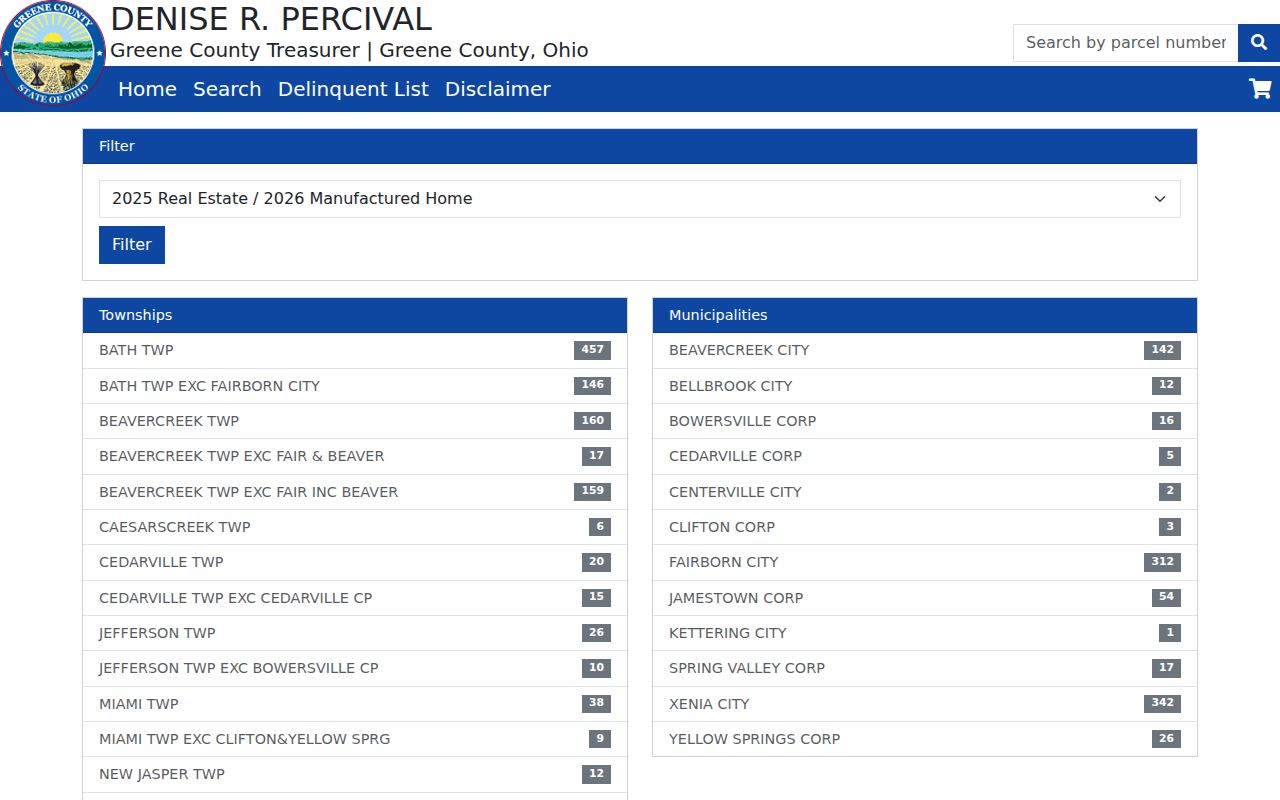
Use a current tax list only to identify its stated tax context, then verify historic ownership or occupancy through the deed, archive, and directory trail.
Fairborn Addresses in Osborn and Fairfield
Original Osborn was relocated after the 1913 flood and Huffman Dam work, then joined Fairfield in 1950 as Fairborn. This makes place-name comparison essential in a Fairborn house history. A pre-1950 address, map, directory heading, cemetery entry, or newspaper item may be filed under Osborn, Fairfield, or Osborn-Fairfield. A modern Fairborn street string alone cannot demonstrate that the historical entry identifies the same physical land.
Use the Archives map sequence to test the location: Osborn/Fairfield Bath Township in 1922; Fairfield in 1925, 1934, and 1948; Osborn in 1934, 1942, and 1948; and Fairborn in 1950, 1955, and 1959. Match the map with lot, plat, and legal-description evidence before treating an old listing as a predecessor at the same Fairborn address. The record issue is a documented geography discontinuity, not a known courthouse-record loss.
Fairborn Past Residents in Directories and Census
Recorded owners are only one part of an address history. The Greene County Room reports city directories to 1870 and historic newspaper microfilm to 1814. Its policy identifies City Directory and Criss-Cross Information as a reference category. These are the Fairborn routes for an edition-specific address-to-listed-occupant clue, but they do not provide a complete count of everyone at the address.
- Choose a directory year close to the deed or tax event, then search Fairborn after 1950 and Fairfield, Osborn, or Osborn-Fairfield before the merger.
- Copy the title page details, printed name, address, street heading, initials, and abbreviation key before expanding an entry.
- Compare the printed address with the period map, parcel legal description, and a criss-cross listing when one is available.
- Pair the directory with the nearest released federal census. The county notes that post-1850 schedules list household names; the latest public decennial census is 1950 under the 72-year release practice.
- Use newspaper notices, cemetery material, probate, family files, and obituaries as cited end-point evidence, recording publication date and source.
The Fairborn city directory collections describe the library and archive holdings in more detail. At the Greene County Room, materials do not circulate, staff assistance is limited, and photocopies generally cost 25 cents per page where allowed. That onsite route is useful when the exact directory volume has not been digitized.
Fairborn Address Trail Endpoints
When the property and directory trail identifies a possible household transition, probate, death, cemetery, and newspaper material can provide a careful next step. Greene County Probate Court handles estates and marriage licenses, while closed wills and estate records are at the Archives. The Clerk of Courts Legal Division files, dockets, indexes, and preserves civil, felony-criminal, domestic-relations, and appellate filings, but it is not the probate route. Court indexes and vital records need the same record-by-record care as a deed chain.
Greene County's Legal Division information is the source for this Fairborn address-history image.
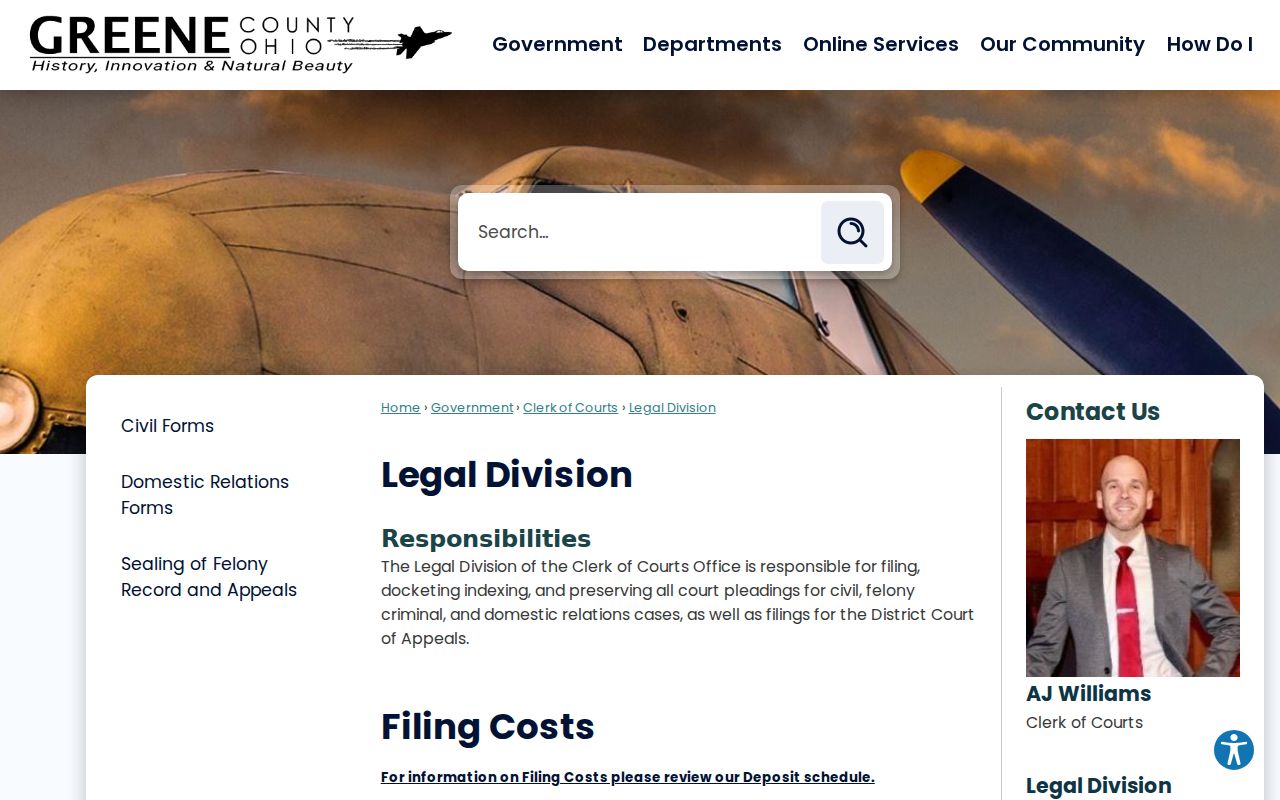
Use court material to document the stated case or file, while keeping probate, land, and address records in their proper lanes.
Ohio's vital-record copy statute, R.C. 3705.23 provides the source for the first image below. It says a state or local registrar issues a certified copy to an applicant who submits a signed application and fee, subject to statutory exceptions. The medical-and-health-use portion of a birth record remains restricted.
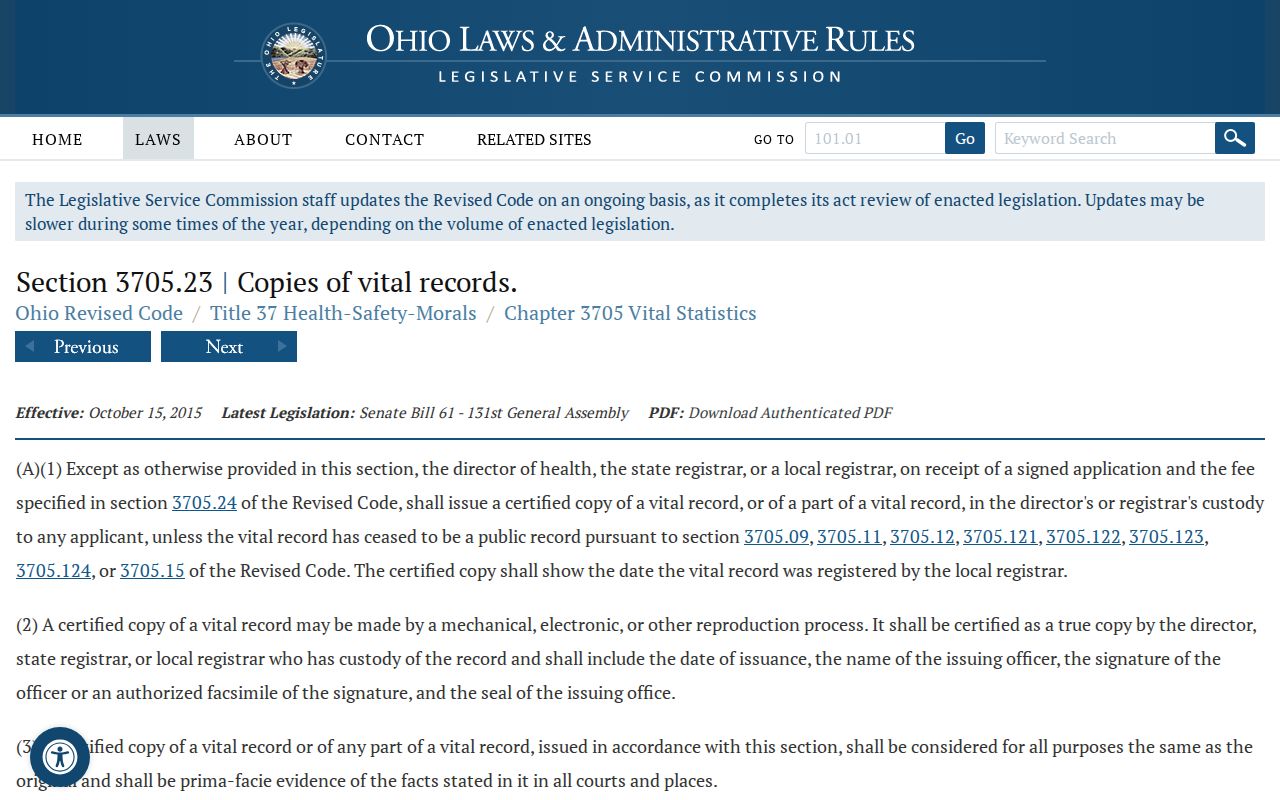
For a Fairborn event, Greene County Public Health holds local birth and death records from 1909 to the present; the state Office of Vital Statistics is the statewide route.
Fairborn Record Preservation and Alerts
Ohio Administrative Code 3701-5-11 is the source for the historical-vital-record image below. The rule permits transfer to Ohio History Connection after 125 years for births and after 50 years for deaths, fetal deaths, and marriage, divorce, dissolution, or annulment abstracts. Those are preservation and transfer thresholds. They do not mean a current vital record is searchable online or that a record will identify every prior Fairborn household.
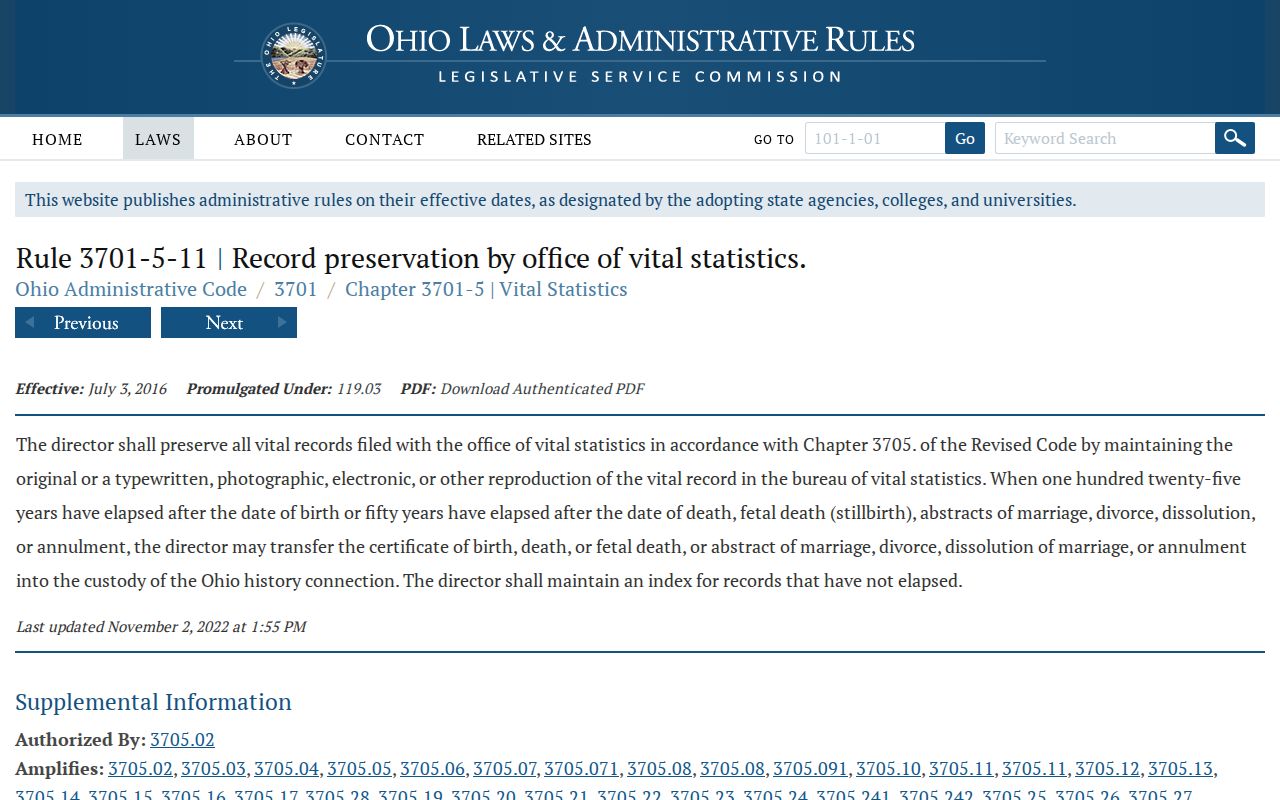
The rule helps choose an archive route for older material, while the actual certificate or indexed source should be checked for the event at issue.
The Recorder also offers a free Property Alert service, shown in this Fairborn address-history image. A user can monitor a personal or entity name, keyword, or document and receive an email when a filing uses the monitored term.
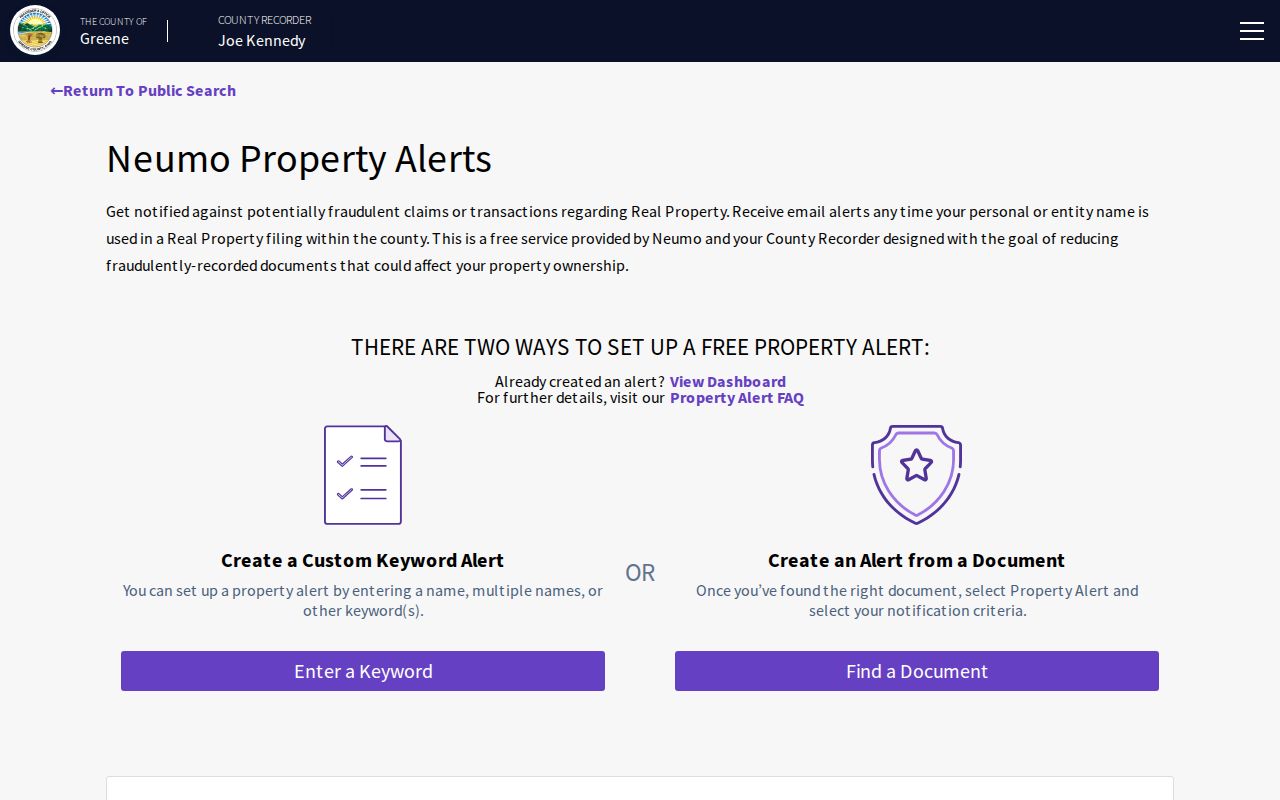
Property Alert is a forward-looking notice tool, not a guarantee of detection or title status, and it does not replace the historical Recorder and Archives deed search.
Note: Ask for an existing record by address, parcel, party, and date range; Ohio's R.C. 149.43 does not require a custodian to create a new address history.